Ship financial AI that wins in production and stands up in audit
Build financial AI that wins in production – and stands up in audit
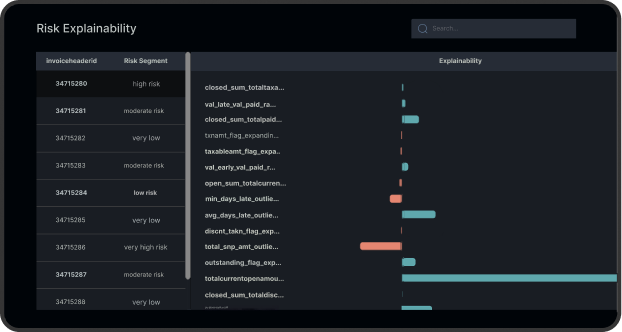
Same‑day underwriting, agentic collections, lower false positives, and true Net New Money growth with explainability, lineage, approvals, and live risk checks built in.
iTuring Collections - agentic outreach that lifts recoveries
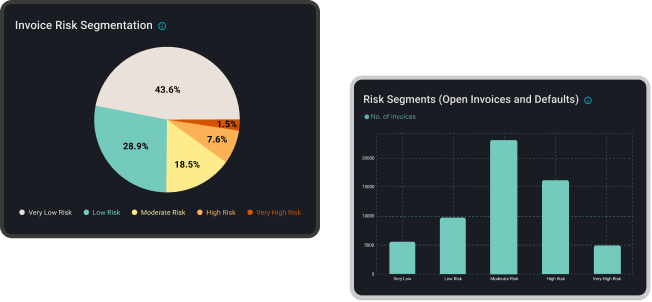
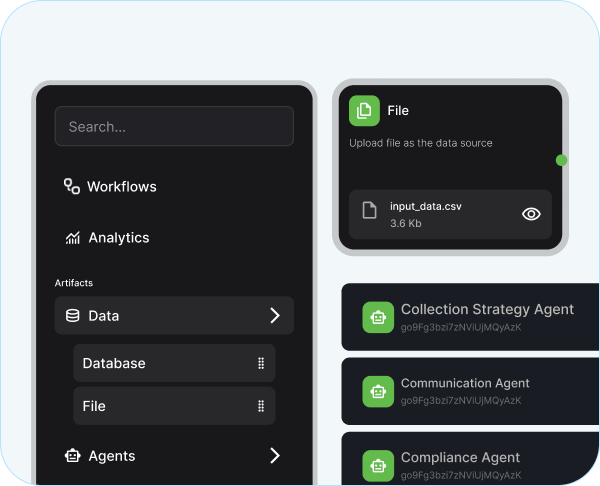
Risk‑segmented next‑best actions adapt messages, channels, and offers to increase RPC/PTP and lower OPEX. Campaigns self‑improve via uplift signals and drift checks while governance and audit remain intact.
Do community banks and credit unions get the same governance controls as nationals?
Yes – identical lineage, explainability, approvals, and documentation with deployment scaled to each environment.
How fast to realize or deliver first value?
First value often within two weeks, with documented outcomes visible in 30–60 days depending on data access and scope.
Can existing Python/Spark/SAS models be governed?
Yes – govern iTuring and non‑iTuring models with the same approvals, inventory, and evidence exports.
What audit evidence is produced?
Step‑level documentation, per‑decision explanations, approvals, version history, lineage, and exportable exam packs.
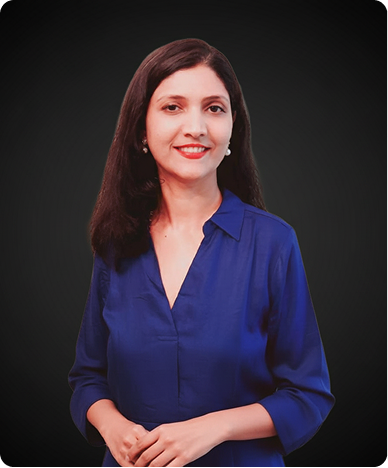
Tarika Bhutani
Senior Director – Sales and Marketing Operations
Tarika is a market development leader driving global growth through strategic partnerships and go-to-market initiatives.
She focuses on expanding enterprise adoption of AI solutions across international markets, working closely with partners and clients to enable data-driven transformation.
Her work centres on scaling enterprise AI through partner-led growth and direct customer engagement, supporting organisations in implementing impactful, data-driven solutions worldwide.
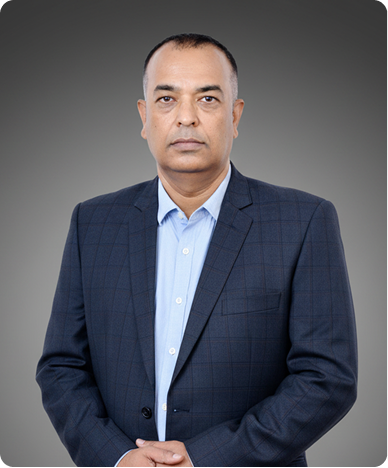
Vipin Johnson
Vice President – Customer Acquisition
Description Goes Here
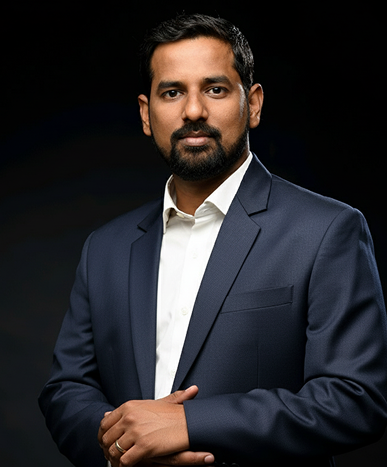
Rajnish Ranjan
Vice President, Head – Data Science
Rajnish brings over two decades of experience leading data-driven transformation across Fortune 500 organisations.
His career spans senior roles at HSBC, Zafin, Cisco, TCS, Nielsen, iQuanti, Symphony, Supervalu, and Harman, delivering measurable cost savings, operational efficiencies, and revenue growth.
With experience across banking, retail, telecom, pharma, CPG, and digital marketing, he leads cross-functional teams at iTuring.ai to deliver advanced analytics, machine learning, and AI solutions.
Aishwarya Hegde
VP Operations & Content Head
Aishwarya has been instrumental in building iTuring.ai from inception and continues to manage core operations across the organisation. Her responsibilities span project operations, financial planning, and evaluating future expansion opportunities.
Prior to iTuring.ai, she worked with Market Probe and WNS Research & Analytics, delivering high-impact decision support and actionable analysis for IBM with a record of zero errors.
Aishwarya holds a postgraduate degree in Data Science and Machine Learning from Manipal University.
Bryan McLachlan
Managing Director – Africa
Bryan has 30 years of experience driving innovation and growth across technology, banking, insurance, and retail.
Prior to iTuring.ai, he held executive leadership roles at Instant Life, AIG, Nedbank, FNB, and TransUnion. He focuses on enabling enterprises to adopt AI and machine learning within trusted, governed, and risk-managed frameworks.
Bryan holds a Master’s degree in Commerce from the University of Johannesburg.
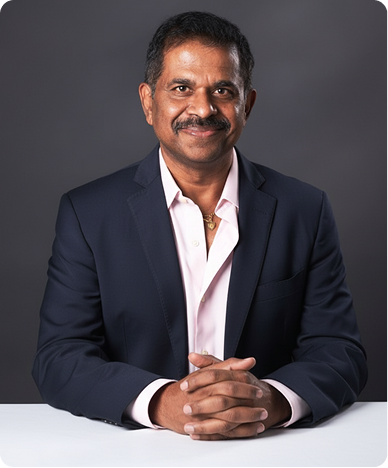
Mohammed Nawas M P
Co-Founder, VP Product Development
Nawas brings 20 years of experience in designing and delivering cloud-native software and data systems. He has held senior technology roles at HCL, Radisys, Kyocera, and Mindtree, leading large development teams and complex product builds.
At iTuring.ai, he oversees product roadmap and customer delivery, applying cloud-first thinking, deep systems expertise, and a focus on building robust, scalable AI solutions that challenge industry norms.
He is a graduate of Rajiv Gandhi Institute of Technology.
Amit Kumar
Co-Founder, VP Product Engineering
Amit is a technology architect with over 18 years of experience designing data-intensive systems and enterprise analytics platforms. He has built highly scalable products across open architecture models and virtualised infrastructure, aligning deep technical detail with business requirements for AI and ML solutions.
Prior to iTuring.ai, he held senior technical roles at Radisys and Aricent. Amit leads platform architecture with a focus on governance, lineage, and traceability.
He holds a First Class with Distinction BTech in Computer Science from Cochin University.
Valsan Ponnachath
President, COO and Co-founder
Valsan brings over two decades of global leadership across sales, professional services, and product operations in technology and SaaS enterprises.
Prior to iTuring.ai, he held senior executive roles at Fiserv, Cisco, and Sun Microsystems, most recently serving as Senior Vice President at Fiserv overseeing global system integration and international professional services. Based in California, he leads iTuring.ai’s growth in the Americas.
Valsan holds an MBA from the University of Nebraska and a BE in Computer Science from Bangalore University.
Suman Singh
Founder & CEO
Before founding iTuring.ai in 2018, Suman led analytics at Zafin and Fiserv as CAO and General Manager Analytics, delivering enterprise-scale solutions still running in production.
His work includes fraud detection systems saving clients over $19M, patented Customer Relationship Score methodology, and price optimisation recognised by the INFORMS Edelman Award (2014). He has authored multiple research papers and pioneered the data-to-value approach.
Suman holds a Master’s in Statistics from CCS HAU and a Bachelor’s in Agricultural Engineering from BHU.